Category: Pinball Reviews

  • Ep. 10 — Total Nuclear Annihilation (Spooky, 2017)

    Ep. 10 — Total Nuclear Annihilation (Spooky, 2017) on YouTube

    In 2015, synthwave musician and engineer Scott Danesi set out to build his own pinball machine from scratch — no company, no license, just a tribute to the brutal, electronic-driven pinball he grew up on. Spooky Pinball picked up his garage project for production in 2017. This episode of The Skill Shot steps up to the machine built entirely around one designer’s vision: an original synthwave soundtrack, a single pop bumper, and an ending where winning blows up the world — and you along with it.

    FlipScore categoryScore
    Shots13 / 20
    Code & Depth12 / 20
    Theme18 / 20
    Build Quality15 / 20
    Resale Value17 / 20
    Total FlipScore75 / 100

    The verdict: A 75 is a solid B, but it needs context — Total Nuclear Annihilation isn’t chasing deep code or a movie license, it’s chasing one designer’s pure vision, and it nails that completely: an original synthwave score, a punishing early-80s difficulty curve, and one of the darkest endings in pinball, where blowing up all nine reactors ends the game for good. It won’t out-code the modern Sterns, and it’s not trying to. Pinside still ranks it #76 with only 800 units ever made, and resale has climbed from a sub-$6,000 launch price into the low eight-thousands. If you love synthwave, retro aesthetics, or punishing pure-skill pinball, this one’s close to perfect.


    ← Back to all episodes

    Older: Ep. 9 — The Mandalorian (Stern, 2021) →

  • Ep. 9 — The Mandalorian (Stern, 2021)

    The Mandalorian Pinball on YouTube

    In November 2019, Disney Plus dropped The Mandalorian, and by the end of season one, Baby Yoda was everywhere. Two years later, at the peak of that cultural moment, Stern handed the license to Brian Eddy — the designer behind Attack from Mars and Medieval Madness — for just his second machine since coming out of a nearly 20-year retirement. This episode of The Skill Shot steps up to one of the best-timed Star Wars machines ever made: Stern’s 2021 widebody, The Mandalorian.

    FlipScore categoryScore
    Shots17 / 20
    Code & Depth17 / 20
    Theme19 / 20
    Build Quality17 / 20
    Resale Value18 / 20
    Total FlipScore88 / 100

    The verdict: An 88 is a strong A. Theme is where this machine separates itself — Carl Weathers’ original voice work, an Emmy-winning Ludwig Göransson score, authentic season one and two clips, and a Grogu sculpture make this the best-executed Disney license in pinball. Shots, code, and build quality all land clean 17s, with the Encounter mini-playfield adding real depth to the ruleset. A Pro trades for $6,000–$7,000, a Premium for $8,500–$10,000, and an LE for $11,000–$13,000, values that have held steady since launch. It’s one of the best modern releases in Stern’s catalog, and the best-timed Star Wars machine ever made.


    ← Back to all episodes

    ← Newer: Ep. 10 — Total Nuclear Annihilation (Spooky, 2017)  |  Older: Ep. 8 — Twilight Zone (Bally, 1993) →

  • Ep. 1 — Gottlieb’s Sinbad (1978)

    Ep. 1 — Gottlieb's Sinbad (1978) on YouTube

    The one that started it all — for the channel and, arguably, for a whole run of movie-inspired pinball. Sinbad is late-70s Gottlieb at its most charming: clean Ed Krynski rules, gorgeous Gordon Morison art, and the kind of straightforward, satisfying shooting that reminds you why you fell for these machines in the first place.

    FlipScore categoryScore
    Shots7 / 20
    Code & Depth7 / 20
    Theme20 / 20
    Build Quality17 / 20
    Resale Value18 / 20
    Total FlipScore69 / 100

    The verdict: On paper, a 69 is a B-minus — but the FlipScore doesn’t have a column for nostalgia, and sometimes that matters more than anything else on the list. This is the cheapest machine I’ll review here by a wide margin, and every point it drops on Shots and Code it earns back on Resale and on story. At this price, with this history, an easy recommendation. I’m never selling mine.


    ← Back to all episodes

    ← Newer: Ep. 2 — Black Knight (Williams, 1980)

  • Ep. 2 — Black Knight (Williams, 1980)

    Ep. 2 — Black Knight (Williams, 1980) on YouTube

    Steve Ritchie’s Black Knight is the machine that dragged pinball into the modern era. A second playfield stacked over the first, Magna-Save to claw your ball back from the outlanes, and a backbox that actually talked to you — in 1980, that was science fiction on legs. It’s loud, it’s mean, and it still holds up.

    FlipScore categoryScore
    Shots16 / 20
    Code & Depth15 / 20
    Theme18 / 20
    Build Quality14 / 20
    Resale Value18 / 20
    Total FlipScore81 / 100

    The verdict: A solid A-minus. A forty-five-year-old machine you can still buy for under three grand that invented mechanics — Magna-Save, the dual-level playfield — that are still showing up on brand-new pins today. A genuine work of art that’ll sit in the man cave and be fun for the whole family. Hard to argue with that.


    ← Back to all episodes

    ← Newer: Ep. 3 — Spider-Man (Stern, 2007)  |  Older: Ep. 1 — Gottlieb’s Sinbad (1978) →

  • Ep. 3 — Spider-Man (Stern, 2007)

    Ep. 3 — Spider-Man (Stern, 2007) on YouTube

    Steve Ritchie’s flowing geometry dressed up in Raimi-era Marvel — the Sandman sinkhole, the Doc Ock magnet, the Green Goblin on his glider, and the whole rogues’ gallery teaming up against Spider-Man. One of the best-selling Marvel pins ever made, and it earned it. Oh, and there’s a Macho Man Randy Savage action figure hiding in there. Really.

    FlipScore categoryScore
    Shots18 / 20
    Code & Depth17 / 20
    Theme18 / 20
    Build Quality17 / 20
    Resale Value17 / 20
    Total FlipScore87 / 100

    The verdict: A rock-solid A-minus. There isn’t a single weak link on this machine — it stands as a benchmark for what a licensed Stern game should be. If Spider-Man happens to be your favorite, and you can find a clean 2007 original under five grand or a Vault Edition around six, don’t hesitate to buy it. Getting great callouts from J. Jonah Jameson the whole time is an added bonus.


    ← Back to all episodes

    ← Newer: Ep. 4 — Eight Ball Deluxe (Bally, 1982)  |  Older: Ep. 2 — Black Knight (Williams, 1980) →

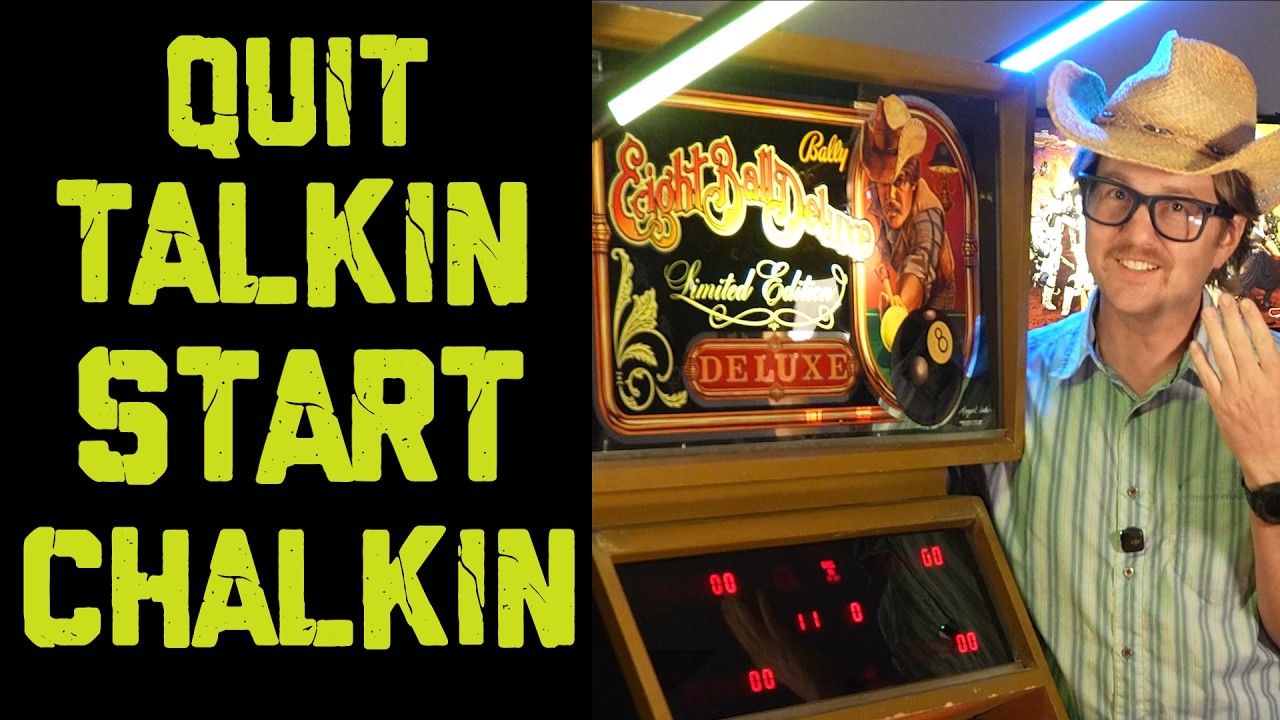
  • Ep. 4 — Eight Ball Deluxe (Bally, 1982)

    Ep. 4 — Eight Ball Deluxe (Bally, 1982) on YouTube

    There’s a reason Bally’s 1982 Eight Ball Deluxe is still widely considered the absolute pinnacle of early-80s solid-state design. In this episode of The Skill Shot, we step up to the backglass of a true arcade legend to figure out why this classic pool-hall layout remains an addictive masterpiece decades later.

    FlipScore categoryScore
    Shots17 / 20
    Code & Depth14 / 20
    Theme16 / 20
    Build Quality19 / 20
    Resale Value16 / 20
    Total FlipScore82 / 100

    The verdict: Eight Ball Deluxe earns its legendary status. The layout is tight, fast, and ruthlessly fair — every shot feels earned, and the risk-reward structure around the rack is as addictive today as it was in 1982. Bally built this one like a tank, and the market knows it. This is the machine people point to when they want to explain why solid-state pinball never needed sixteen ramps to be great.


    ← Back to all episodes

    ← Newer: Ep. 5 — Space Shuttle (Williams, 1984)  |  Older: Ep. 3 — Spider-Man (Stern, 2007) →

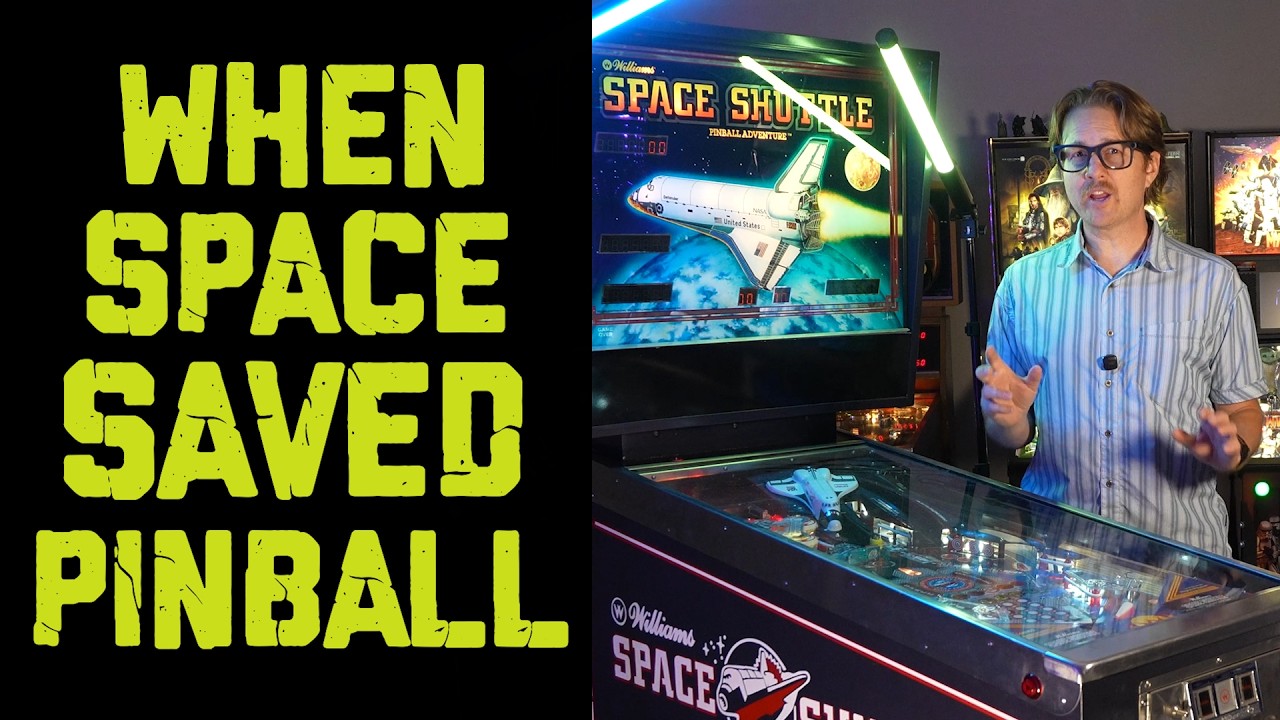
  • Ep. 5 — Space Shuttle (Williams, 1984)

    Ep. 5 — Space Shuttle (Williams, 1984) on YouTube

    In 1984, Williams Electronics was one failed pinball machine away from shutting down its pinball division for good — management set a 1,900-order survival target and meant it. In this episode of The Skill Shot, we step up to the machine that cleared that bar more than three times over: Space Shuttle, the first solid-state production pin with a playfield toy, and the game that quietly rewrote what a pinball machine could be.

    FlipScore categoryScore
    Shots13 / 20
    Code & Depth11 / 20
    Theme18 / 20
    Build Quality16 / 20
    Resale Value15 / 20
    Total FlipScore73 / 100

    The verdict: On paper, a 73 is a B — but like Sinbad, Space Shuttle’s real worth isn’t in its FlipScore columns. The shooting is solid-if-simple and the code is thin by modern standards, yet this is the machine that introduced the playfield toy, pulled Williams back from the edge, and proved pinball had a future after the 1983 video game crash. At around $2,500 for a clean example, it’s one of the cheapest ways to own a genuinely historic pin — and for the NASA nerds, a little piece of the space program for the game room. Easy recommendation.


    ← Back to all episodes

    ← Newer: Ep. 6 — World Cup Soccer (Bally, 1994)  |  Older: Ep. 4 — Eight Ball Deluxe (Bally, 1982) →

  • Ep. 6 — World Cup Soccer (Bally, 1994)

    Ep. 6 — World Cup Soccer (Bally, 1994) on YouTube

    In February 1994, Bally released World Cup Soccer just months before the United States hosted its first-ever World Cup — a FIFA-licensed game right down to the tournament’s mascot, Striker the dog. Designed by John Popadiuk and Defender co-creator Larry DeMar, this episode of The Skill Shot steps up to the machine built around one perfect hook: a soccer goal guarded by a sliding, articulating goalie, backed by a giant spinning rubber ball and a Magna-Save that turns your outlane into a net you have to defend.

    FlipScore categoryScore
    Shots16 / 20
    Code & Depth15 / 20
    Theme18 / 20
    Build Quality16 / 20
    Resale Value17 / 20
    Total FlipScore82 / 100

    The verdict: An 82 is a B, and it’s a game built to be loved by everyone in the room — the goal-and-goalie shot needs no rulebook, the FIFA license is worn proudly through Striker, the city tour, and Tim Kitzrow’s NBA Jam-style callouts, and there’s even a buried Mortal Kombat cameo for the diehards. It won’t out-code the DMD-era heavyweights, but it doesn’t need to; Pinside still ranks it in the Top 100 three decades later. Expect to pay around $4,800 for a clean player, with World Cup demand likely to push that higher. An easy add for anyone standing in the soccer-and-pinball Venn diagram.


    ← Back to all episodes

    ← Newer: Ep. 7 — The Hobbit (Jersey Jack, 2016)  |  Older: Ep. 5 — Space Shuttle (Williams, 1984) →

  • Ep. 7 — The Hobbit (Jersey Jack, 2016)

    Ep. 7 — The Hobbit (Jersey Jack, 2016) on YouTube

    When Jersey Jack Pinball tackled Peter Jackson’s trilogy, they didn’t just build a game — they engineered an absolute monster. Designed by Joe Balcer as the follow-up to Wizard of Oz, this episode of The Skill Shot steps up to the massive widebody cabinet of The Hobbit: four stage-molded pop-up beasts (warg, orc, goblin, and spider), a 27-inch full-color LCD playing real clips from the films, and a code base spanning 31 chapters built around the legendary Smaug multiball.

    FlipScore categoryScore
    Shots18 / 20
    Code & Depth19 / 20
    Theme19 / 20
    Build Quality17 / 20
    Resale Value14 / 20
    Total FlipScore87 / 100

    The verdict: An 87 is a flat-out A, and it’s earned across the board — the shots are sharp, the code is some of the deepest in modern pinball, and the theme execution (that LCD, those pop-up beasts, Smaug himself) is as immersive as pinball gets. Build quality holds up too, though resale lags a bit behind everything else. Expect $6,500 to $8,500 depending on edition, more for the Smaug Gold Special Edition — steep, but for Tolkien fans or JJP collectors, this is one of the genre’s true modern giants.


    ← Back to all episodes

    ← Newer: Ep. 8 — Twilight Zone (Bally, 1993)  |  Older: Ep. 6 — World Cup Soccer (Bally, 1994) →

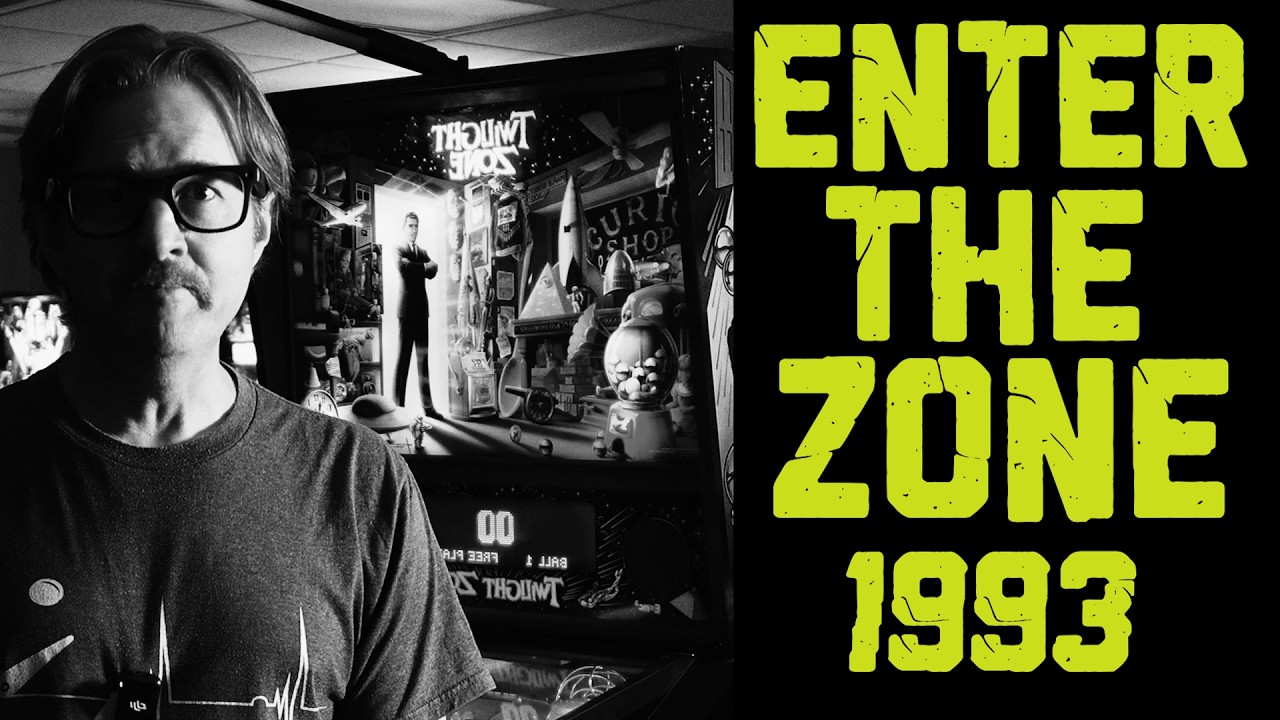
  • Ep. 8 — Twilight Zone (Bally, 1993)

    Ep. 8 — Twilight Zone (Bally, 1993) on YouTube

    After designing pinball’s all-time bestseller, Williams handed Pat Lawlor a blank check and asked what he wanted to build next. His answer, after a 16-month development cycle, was Twilight Zone. This episode of The Skill Shot steps up to Bally’s 1993 widebody SuperPin — a working mechanical clock, a real gumball machine, a non-magnetic ceramic Powerball, and a pair of invisible magnet-powered flippers on the Powerfield mini-playfield, all wrapped in John Youssi art hiding references to dozens of the show’s episodes.

    FlipScore categoryScore
    Shots19 / 20
    Code & Depth20 / 20
    Theme19 / 20
    Build Quality15 / 20
    Resale Value18 / 20
    Total FlipScore91 / 100

    The verdict: A 91 is the best score on this list so far, and it’s earned — the shots are excellent, the code is the deepest of any machine here, and the theme execution is unmatched, right down to Golden Earring’s title track remixed straight into the soundtrack. The catch is build quality: this is a mechanically dense machine, and something is almost always due for a tune-up. Clean players trade in the $5,000 to $8,000 range, with restored examples pushing past $10,000 — steep, but for a machine still argued to be the best pinball ever made, worth the maintenance headache.


    ← Back to all episodes

    ← Newer: Ep. 9 — The Mandalorian (Stern, 2021)  |  Older: Ep. 7 — The Hobbit (Jersey Jack, 2016) →